


The NHS is under increased pressure to reduce expenditure whilst continuing to deliver the highest standards of patient care ¹. As budgets become tighter, one strategy NHS theatres can deploy is a review of their surgical consumables.
One of these surgical consumables is absorbable haemostats. Haemostats are routinely used across a variety of surgical disciplines to control capillary, venous and minor arteriolar bleeding, yet product selection is often driven by familiarity rather than by review. This raises an important question: could NHS hospitals make better use of limited budgets by reviewing commonly used haemostatic products, rather than continuing to use familiar choices?
This article explores how NHS trusts can review their choice of oxidised cellulose haemostat to identify potential cost savings whilst maintaining the clinical performance and confidence expected in the operating theatre.
Assessing Clinical Performance Before Cost
When selecting any surgical haemostat, clinical performance should always be the priority. Before considering cost, hospitals need to ensure that a product is suitable for its intended application, performs consistently in theatre and supports patient outcomes.
Importantly, choosing a cost-effective haemostat doesn’t mean compromising on quality.
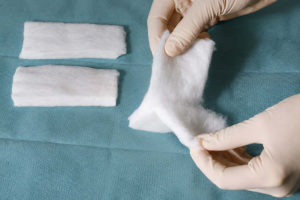
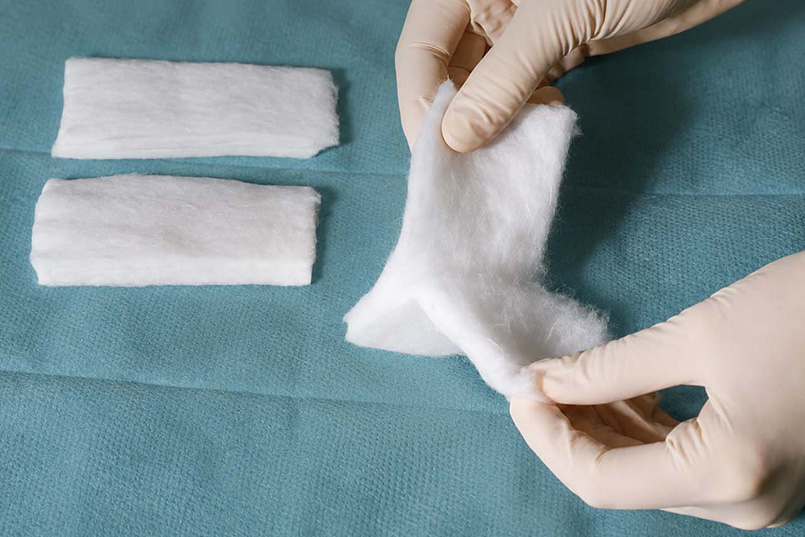
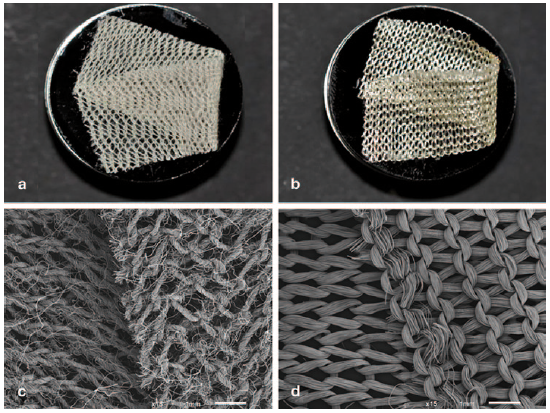
Oxidised cellulose haemostats can be broadly divided into two types: regenerated and non-regenerated oxidised cellulose. Regenerated oxidised cellulose is manufactured by dissolving and reforming cellulose fibres before oxidisation to create a uniform woven structure; an example of a regenerated oxidised cellulose haemostat is Surgicel™ by Ethicon. On the other hand, non-regenerated oxidised cellulose preserves the natural cellulose fibre, resulting in a softer and more conformable material that readily adapts to irregular tissue surfaces whilst maintaining the same intended clinical purpose²; an example of a non-regenerated oxidised cellulose haemostat is Okcel by Synthesia.
Feature | Regenerated Oxidised Cellulose | Non-Regenerated Oxidised Cellulose |
Manufacturing | Cellulose is dissolved, regenerated and then oxidised. | Natural cellulose fibres are oxidised directly. |
Fibre Structure | Uniform, woven fibre structure. | Natural, random fibre network. |
Material Characteristics | Smooth, fabric-like. | Soft, pliable and comfortable. |
Typical Appearance | Woven or knotted sheet. | Felt-like sheet. |
Clinical Purpose | Control of capillary, venous and minor arteriolar bleeding. | Control of capillary, venous and minor arteriolar bleeding. |
Figure 1: Comparing Regenerated to Non-Regenerated Oxidised Cellulose Haemostats²
Although many hospitals traditionally use regenerated oxidised cellulose, clinical studies comparing regenerated and non-regenerated oxidised cellulose concluded that the non-regenerated haemostat was superior in achieving haemostasis, with a mean haemostasis time of 193.7 seconds compared to 238.8 seconds for the regenerated alternative³.
Non-regenerated oxidised cellulose has a frayed fibre structure and therefore, greater surface area than the smoother, more condensed fibres of regenerated cellulose, providing a greater surface area for interaction with blood. This allows for more absorption and faster haemostasis, as one comparative study found. Non-regenerated oxidised cellulose had a haemostatic success rate of 60% after 30 seconds, 85% after 60 seconds and 97.5% after 90 seconds. Regenerated had a success rate of 15% after 30 seconds, 37.5% after 60 seconds and 70% after 90 seconds. This reinforces the superior clinical performance of the non-regenerated product⁶.
Reducing Costs Through Product Review
The financial impact of a high-volume consumable such as haemostats cannot be judged by its unit price alone. While the cost difference between two comparable products may appear relatively small, absorbable haemostats are used regularly across multiple operating theatres and a wide range of surgical specialities.
Over the course of a year, even what seem like small savings on individual units can accumulate into significant savings for an NHS trust.
This opportunity is particularly relevant where hospitals continue to purchase long-established haemostatic products due to familiarity. While these products have become a part of routine practice, published clinical evidence has demonstrated that non-regenerated oxidised cellulose products can achieve superior haemostatic outcomes to regenerated oxidised cellulose³.
This suggests that paying a premium for a long-established product does not necessarily deliver better clinical outcomes and can cost significantly more.
The potential financial impact of switching products has already been demonstrated within the NHS. A major cardiac NHS Foundation Trust started using Okcel after being made aware of the huge savings that could be achieved by switching from the most commonly used oxidised cellulose haemostat to the Okcel alternative.
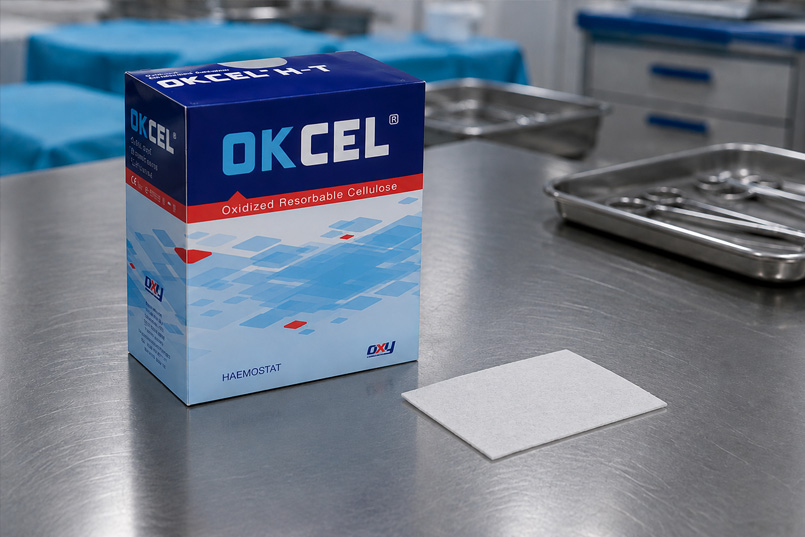
Okcel, distributed in the UK by Uniplex, is an absorbable non-regenerated oxidised cellulose haemostat developed by Synthesia in the Czech Republic. Okcel can be used for the control of capillary, venous and minor arteriolar bleeding during surgery. It is available in a range of formats which suit different procedures and surgical disciplines. Having been used in over 3 million surgical procedures worldwide over the past 20 years, Okcel has established a long history of clinical use across a wide range of surgical applications.
The Cardiac Hospital and International Centre of Excellence that made significant savings by switching their oxidised cellulose haemostats have a large requirement for the fibrous form of Okcel, Okcel F, due to the nature of cardiac surgery. Okcel F is designed to support faster haemostasis, more accurate placement and increased adaptability over the original form of the product. Over a four-year period, the major cardiac trust saved over £350,000 from the previous provider.
“Over a four-year period, the major cardiac hospital saved over £350,000”
In one study (involving 59 subjects), Okcel achieved the endpoint of haemostasis within 3 minutes⁴. In a separate study, Okcel demonstrated a higher area density than comparable Surgicel™ products⁵ across all three formats tested. Okcel F had an area density approximately 26% higher than Surgicel™ Fibrillar⁵, Okcel H-D approximately 31% higher than Surgicel™ Nu-Knit⁵, and Okcel H-T approximately 38% higher than Surgicel™ Original⁵. A higher area density means that more material is present within the same surface area, which can increase the material’s capacity to absorb fluid and support haemostasis.
For NHS hospitals facing increasing financial pressures, the question is no longer simply which haemostat has always been used, but whether the current product continues to offer the best value. Where clinical performance can be maintained, reviewing high-volume consumables such as haemostats presents the opportunity to achieve recurring savings.
Conclusion
Every operating theatre has its own techniques, preferences and ways of working, and whilst clinical evidence and product specifications are essential when assessing a haemostat, there is no substitute for how a product performs in your own environment.
Choosing a new haemostat should be based on evidence, clinical experience and confidence that the product is suitable for the intended application. By combining published evidence with practical evaluation, NHS hospitals can make informed purchasing decisions that support both high standards of care and significant cost savings.
A product evaluation allows your surgical teams to assess whether OKCEL can provide the performance they expect while reducing long-term expenditure. If your trust would like a free sample of Okcel – CLICK HERE
Or, if you require more information on Okcel – CLICK HERE
References
- 1.NHS England. 2025/26 Priorities and Operational Planning Guidance. Published 30 January 2025. – CLICK HERE
- 2.Lewis KM, Spazierer D, Urban MD, Lin L, Redl H, Goppelt A. Comparison of regenerated and non-regenerated oxidized cellulose hemostatic agents. Eur Surg Res. 2013;51(3-4):213-220. – CLICK HERE
- 3.Zhang C, Kim KH, Choi HJ, et al. A randomized controlled trial to compare the efficacy of regenerated and non-regenerated oxidized cellulose gauze for the secondary treatment of local bleeding in patients undergoing hepatic resection. Ann Surg Treat Res. 2021;100(4):193-201. – CLICK HERE
- 4.Health Canada. Regulatory Decision Summary – OKCEL Absorbable Oxidized Cellulose Cotton Wool Haemostat. Published January 2026. – CLICK HERE
- 5.Jindřich Lahovský, MD. Comparison of basic physicochemical parameters, USP parameters and mechanical and biological performance of regenerated and non-regenerated oxidized cellulose-based haemostats. Study Report Ref. No. AP-SY-1901. Data on file: 88630-002_01. – CLICK HERE
- 6.Lewis KM, Spazierer D, Urban MD, Lin L, Redl H, Goppelt A. Comparison of regenerated and non-regenerated oxidized cellulose hemostatic agents. Eur Surg. 2013;45(4):213-220. doi: 10.1007/s10353-013-0222-z. Epub 2013 Jul 4. PMID: 23950762; PMCID: PMC3739866. – CLICK HERE