


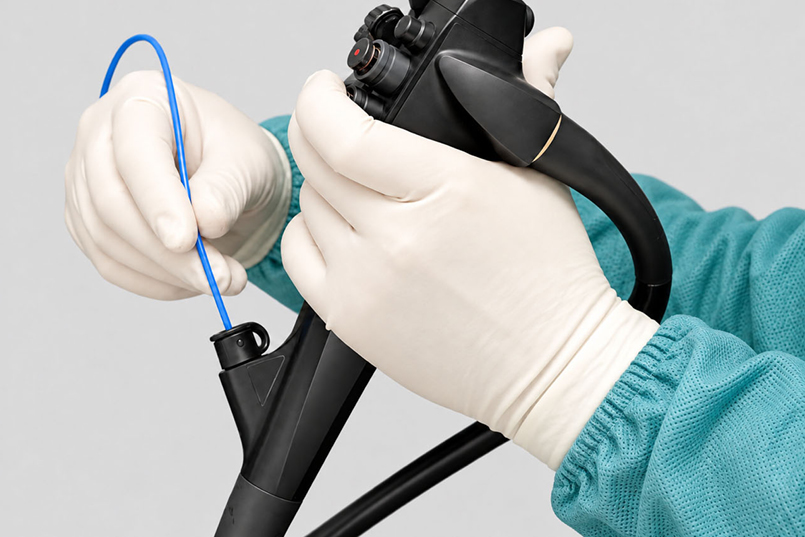
As hospitals work to increase surgical capacity and reduce waiting lists, Sterile Services Departments (SSDs) are facing greater pressure to turn instruments around quickly while maintaining consistent cleaning standards. To ensure these standards, decontamination departments need to review processes and best practices.
A crucial stage of the reusable surgical instrument decontamination process is manual cleaning. This stage removes contamination such as blood, tissue, and other debris before instruments undergo disinfection and sterilisation. Instruments with internal channels, such as flexible endoscopes, suction tubes, and trocars, need particular attention. These narrow channels (also referred to as lumens) can be difficult to clean; however, removing debris is essential. The preferred method to remove these contaminants is with a channel cleaning brush.
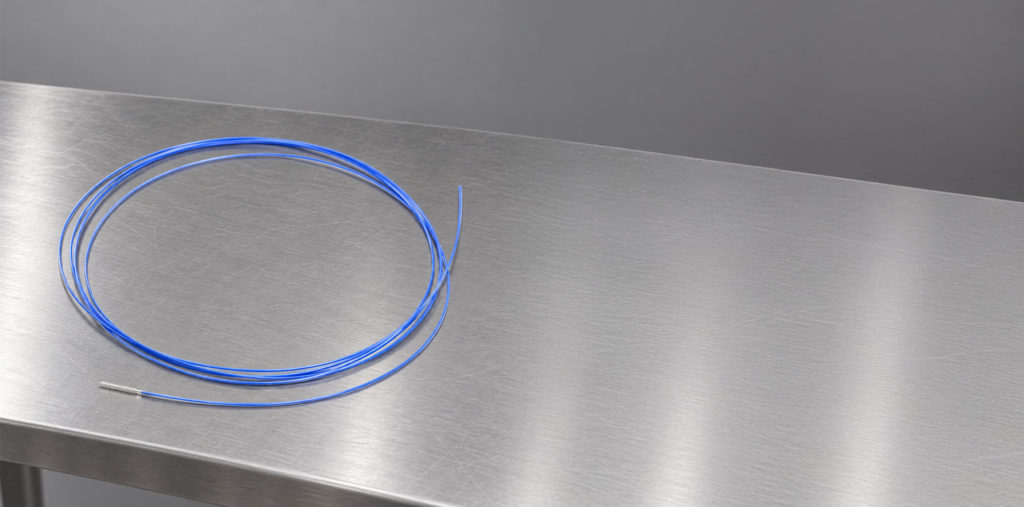
Figure 1: Channel cleaning brush used to clean flexible endoscopes
What seems quite simple, a brush, is commonly incorrectly selected, which can lead to slower, ineffective cleaning. When choosing a channel cleaning brush, there are two main configurations to consider: the length of the brush and the head diameter.
Choosing the correct length
The length of the brush is the total size, including the head and the handle, sometimes also referred to as the wand. The length is an essential part of the cleaning brush, as it allows for one of the most important, but also commonly incorrectly used, applications: the pull-through method. Where an instrument’s channel has two openings, the brush should be pulled through instead of pushed through, unless specifically stated by the brush or instrument manufacturer.
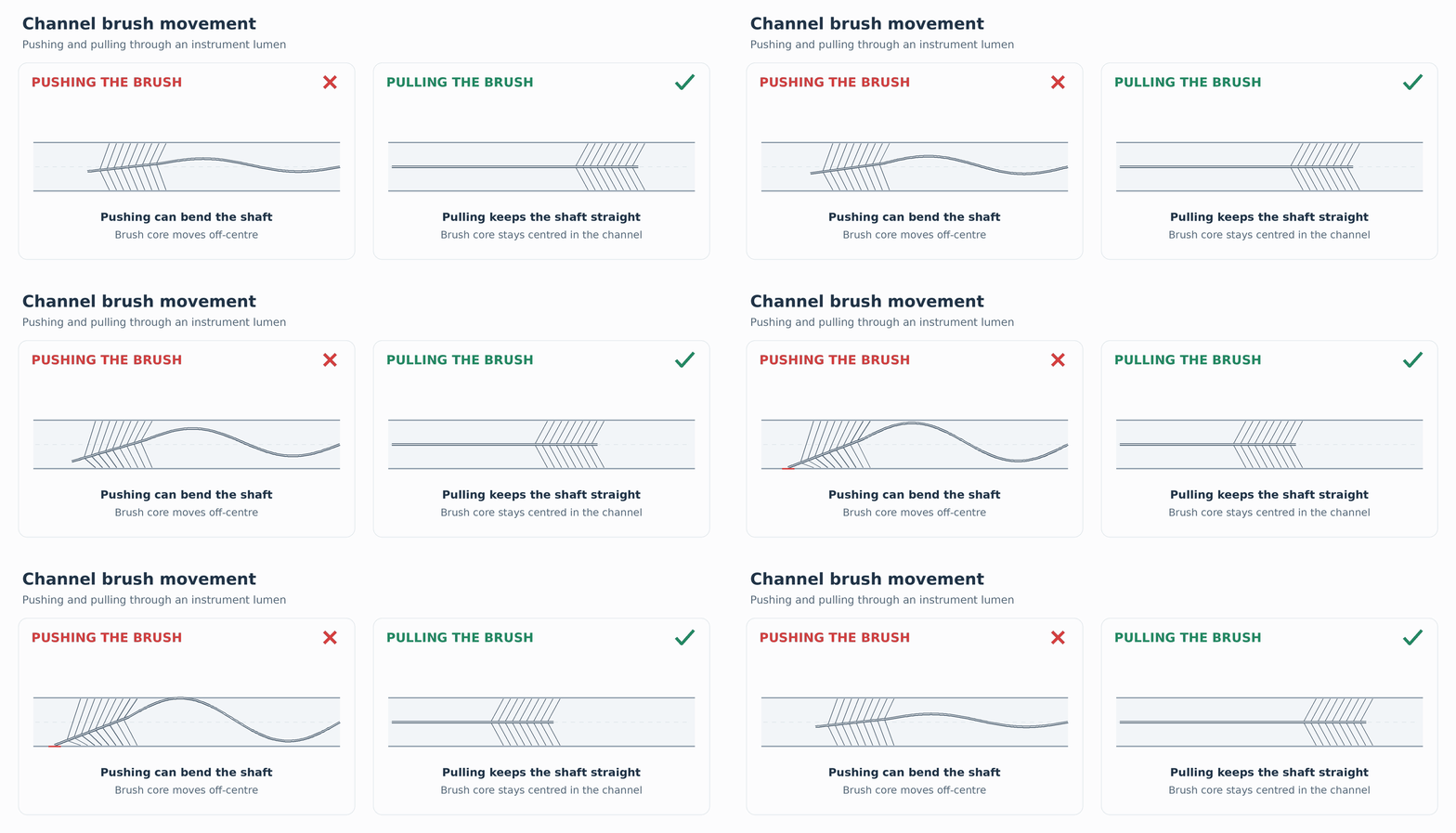
Figure 2: Pulling a channel cleaning brush vs pushing
Figure 2 illustrates how pushing the brush can cause its head to move away from the centre of the lumen. This may reduce the bristles’ contact with the channel lining, limit dirt removal and risk scratching the instrument’s channel, as the brush tip presses against the sides. It may also lead users to select an incorrectly sized, smaller brush head to pass through the channel. Pulling the brush helps keep the head central, allowing the bristles to glide through the channel while maintaining contact with the lining for effective cleaning.
Some channel cleaning brushes on the market combine a channel and port cleaning brush in one; these brushes mean a technician cannot use the pull-through technique, as the port brush handle is larger than the channel. Most manufacturers are aware of this and therefore offer a separate port cleaning brush. Where a channel has only one opening, the brush must be inserted and withdrawn through that same opening, so a pull-through technique is not possible.
The correct brush length isn’t only important so that the pull-through technique can be used; in a recent study, it was found that 40% of sterile service employees had received a repetitive strain injury (RSI)¹. An RSI is an injury that occurs from repeated muscle movements, such as pulling brushes through flexible endoscopes. RSI can lead to staff absenteeism, which increases the pressure on busy SSD departments, emphasising the importance of considering ergonomics during manual cleaning. Selecting the shortest suitable brush, while maintaining the pull method, may help minimise unnecessary handling and arm movement, and therefore reduce RSI.
Choosing the correct diameter head
Once the correct channel cleaning brush length has been established, the head diameter can be considered. This selection process is important, as highlighted by the animation in Figure 3. If the head diameter is too big, the bristles are too long, which means they sweep along the channel and won’t use the tip of the bristle, which is the most effective part for cleaning the channel. If the head diameter is too small, debris will be missed as the bristles won’t make contact with all the channel lining. With the correct head diameter, the bristle tips make contact with the channel’s lining, providing the most effective clean.
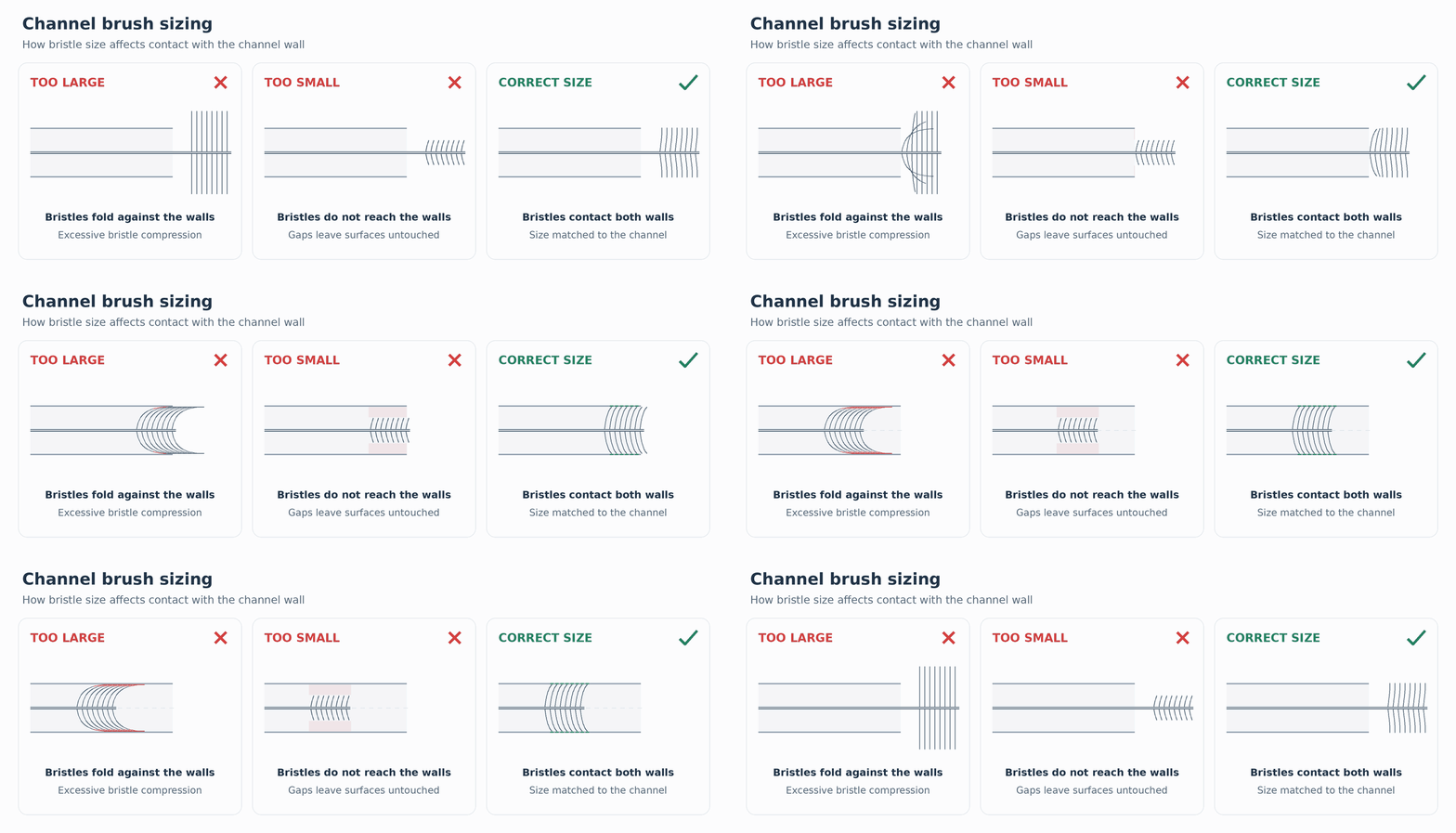
Figure 3: Pulling a channel cleaning brush with a head that’s too big, too small and correct
There is a growing trend with channel cleaning brushes where manufacturers are putting a head on both ends of the brush, especially with flexible endoscope channel cleaning brushes. Typically, the heads are two different sizes, with one side being significantly smaller. A recent research paper found there was no “significant difference” in performance and therefore, no overall advantage to using a double-head instead of a single head². There will, however, be a significant difference in cost, and the second head also increases the risk of scratching the channel lining. Sterile Service Managers and their teams would therefore benefit from using a good-quality single-headed brush.
When deciding on the correct head diameter for the channel cleaning brush, a lot of devices, such as trocars, will have the size on the device. This may be stated in millimetres, or sometimes the French scale (Fr), where 1 French equals 0.33mm. Flexible endoscopes commonly also have their channel diameter stated next to their model number; however, not always. If the channel diameter isn’t marked on the scope, it can be found in the instructions for use or reprocessing instructions.
Sometimes a surgical instrument’s channel diameter won’t be marked or listed on a reprocessing document, such as a suction tube. The correct brush will therefore come from practical assessment of brush fit, which can support selection. If correct, the bristles should contact the channel walls, with slight resistance during movement, without the brush needing to be forced.
Reusable or single-use
There is a debate around the use of reusable or single-use channel cleaning brushes, as both have their benefits and drawbacks. A study directly compared reusable vs single-use³, with the benefits and drawbacks from the paper listed in Figure 4.
| Type of Channel Cleaning Brush | Benefits | Drawbacks |
|---|---|---|
| Reusable | • Purchase cost is spread across multiple uses, with fewer brushes discarded. • Can provide effective cleaning when suitable and properly maintained. | • Requires reprocessing between uses, adding labour and resource costs. • Bristles and shafts can deteriorate, requiring inspection and replacement. • Inadequate reprocessing creates a risk of transferring contamination. |
| Single-use | • Fresh brush for each use, avoiding accumulated wear and contamination from previous instruments. • No brush reprocessing required, reducing that workload. | • Recurring purchasing costs and disposal waste. • Being single-use does not itself guarantee better cleaning; correct size, design and technique remain essential. |
Figure 4: The benefits and drawbacks of using reusable vs single-use channel cleaning brushes³
Both reusable and single-use brushes have their place in the sterile service department, but in the United Kingdom, single-use is heavily preferred. This is due to the convenience offered, as departments are under pressure to have higher throughput and therefore take advantage of the benefit. However, with environmental targets becoming more and more important, managers are starting to consider reusable options.
High-quality channel cleaning brushes
The final decision for sterile service managers is which manufacturer’s brushes to use. Uniplex (UK) Ltd have been distributing the LTA Medical range of cleaning brushes in the UK for over 20 years. Over the decades, managers have become loyal to the brushes as they offer consistent high-quality cleaning, and the portfolio provides solutions for any manual cleaning requirement.
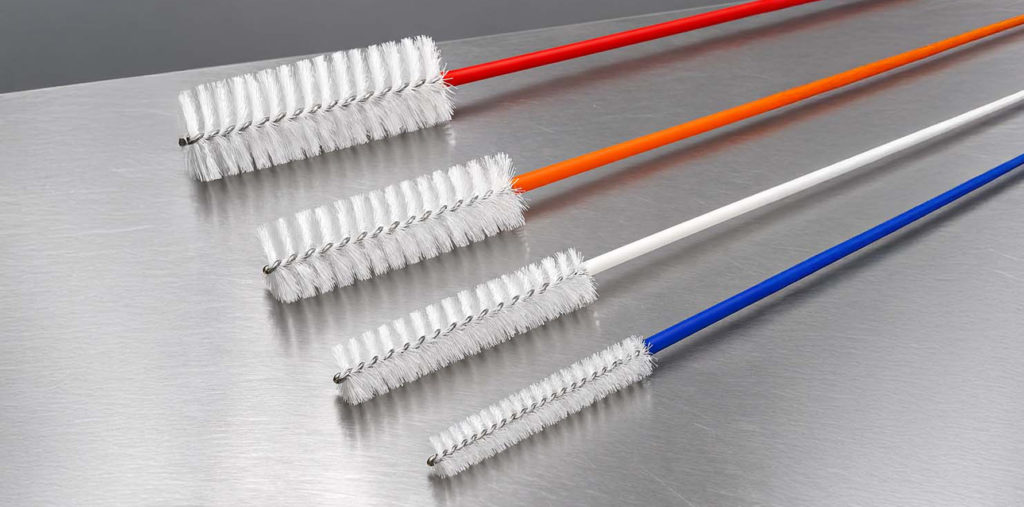
Figure 5: Channel cleaning brushes supplied by Uniplex (UK) Ltd
Uniplex has a wide selection of single-use channel cleaning brushes with brush head diameters from 1.2mm up to 15mm and in lengths from 30cm up to 300cm. The range includes channel cleaning brushes, laparoscopic channel cleaning brushes and endoscopic channel cleaning brushes. These brushes are colour-coded to help the technician identify the brush head diameter. They also have a semi-flexible handle, so they can pass through curved channels; they then return back to their original shape after use.
Uniplex also has a range of reusable channel cleaning brushes. The G-flex range has detachable heads which can be replaced daily, but the wand lasts up to 3 months, reducing plastic waste disposal. The range has handles in 25cm and 50cm with heads from 3 mm to 40 mm. The portfolio also includes Microflex for the smallest of channels. The Microflex comes in 30, 50 and 75cm with heads from 1 – 5mm for up to 1 month’s worth of consistent cleaning.
All of Uniplex’s channel cleaning brushes are available on NHS Supply Chain and are stocked in the UK for quick delivery.
To Summarise
- Sterile services departments are under more and more pressure to turn instruments around quickly while maintaining consistent cleaning standards.
- There are two main configurations to consider with channel cleaning brushes: the length of the brush and the head diameter.
- The shortest brush length which allows for the pull-through technique should be used. This allows higher-quality cleaning and reduces the risk of RSI.
- It’s important to use the correct brush head diameter to ensure the bristle tips make contact with the channel lining.
- The channel diameter can often be found on the instrument, in the instructions for use or in the reprocessing instructions.
- Uniplex offers a comprehensive range of single-use and reusable channel cleaning brushes.
Get in Touch
You can see Uniplex’s cleaning brushes by clicking here. If you would like one of our sales team to come and show you the brushes, or if you would prefer some samples to be sent over, get in touch:
info@uniplexuk.com
0114 241 3410
This article provides practical advice on channel cleaning brush selection. Technicians should always consult the instructions for use and reprocessing instructions of the surgical instrument or medical device they’re cleaning.
References
1) Xavier, R.S., Vigário, P. dos S., Faria, A.C.D., Dusek, P.M. and Lopes, A.J. (2022) ‘The perception of nursing professionals working in a central sterile supplies department regarding health conditions, workload, ergonomic risks, and functional readaptation’, Advances in Preventive Medicine, 2022, article 1023728. Available at: https://doi.org/10.1155/2022/1023728.
2) Colman, S., Vanzieleghem, T. and Leroux-Roels, I. (2022) ‘In vitro comparison of 3 different brushes for manual cleaning of endoscopes’, Infection Control & Hospital Epidemiology, 43(8), pp. 1076–1078. Available at: https://doi.org/10.1017/ice.2021.170.
3) Yamada, Y., Hikichi, T., Sato, M., Nakajyo, M., Mizuno, Y., Hashimoto, H., Suzuki, F., Suenaga, Y., Watanabe, M., Hirano, N., Senzaki, M. and Obara, K. (2008) ‘Comparison of usefulness between a conventional reusable brush and two kinds of new single-use brushes in cleaning the working channel of the endoscope’, Fukushima Medical Journal, 58(3), pp. 193–199. Available at: https://www.sasappa.co.jp/online/abstract/fij/1/058/html/0610580301.html (Accessed: 18 October 2026).